






Why Leading Enterprises Choose Worksome for US Expansion
Worksome acts as the legal employer for your US contingent workforce, handling the heavy lifting of employment law so you can focus on growth. We eliminate the administrative drag of establishing legal entities, dramatically accelerating your speed-to-hire
.webp)
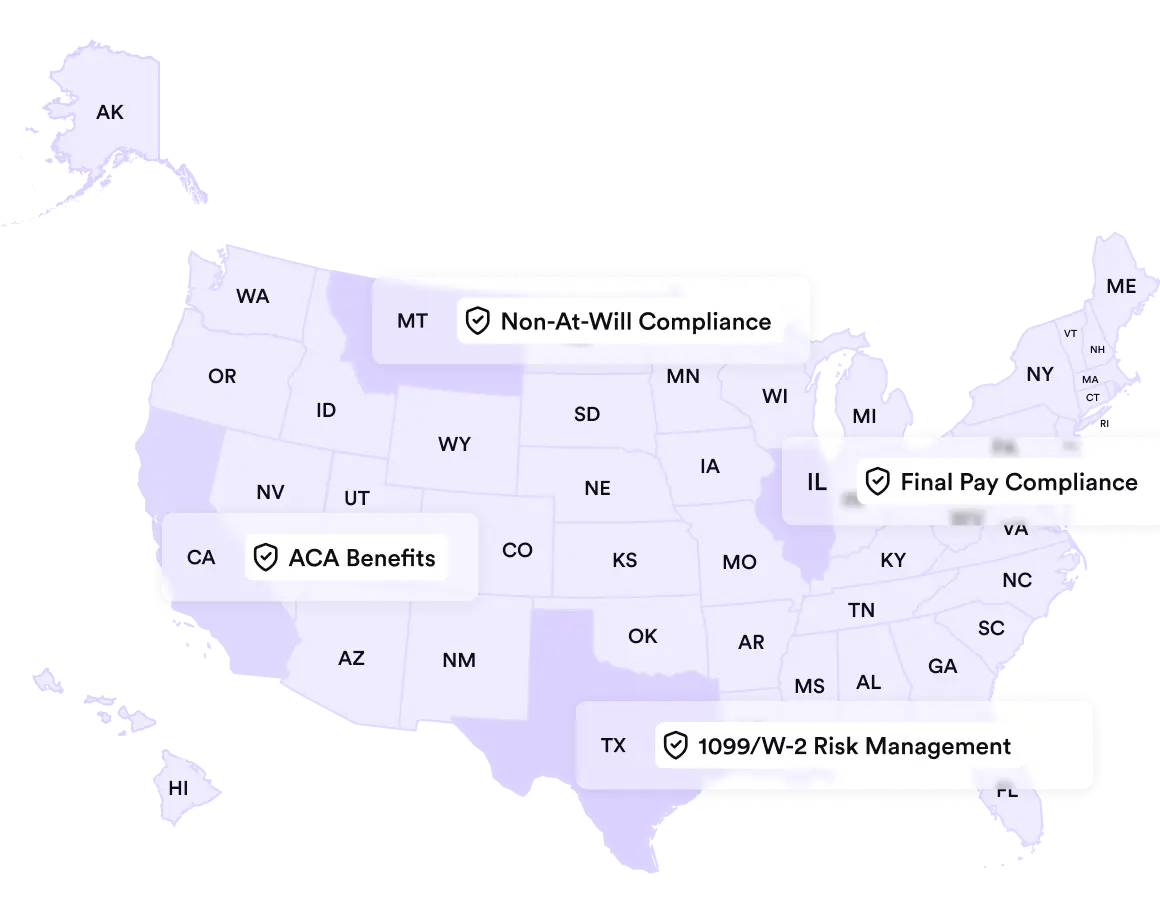
Federal, State & Local Compliance with Risk Mitigation



Ask us anything about US EOR
Sourcing, compliance, payments, classification.
Get straight answers about your external workforce, instantly.
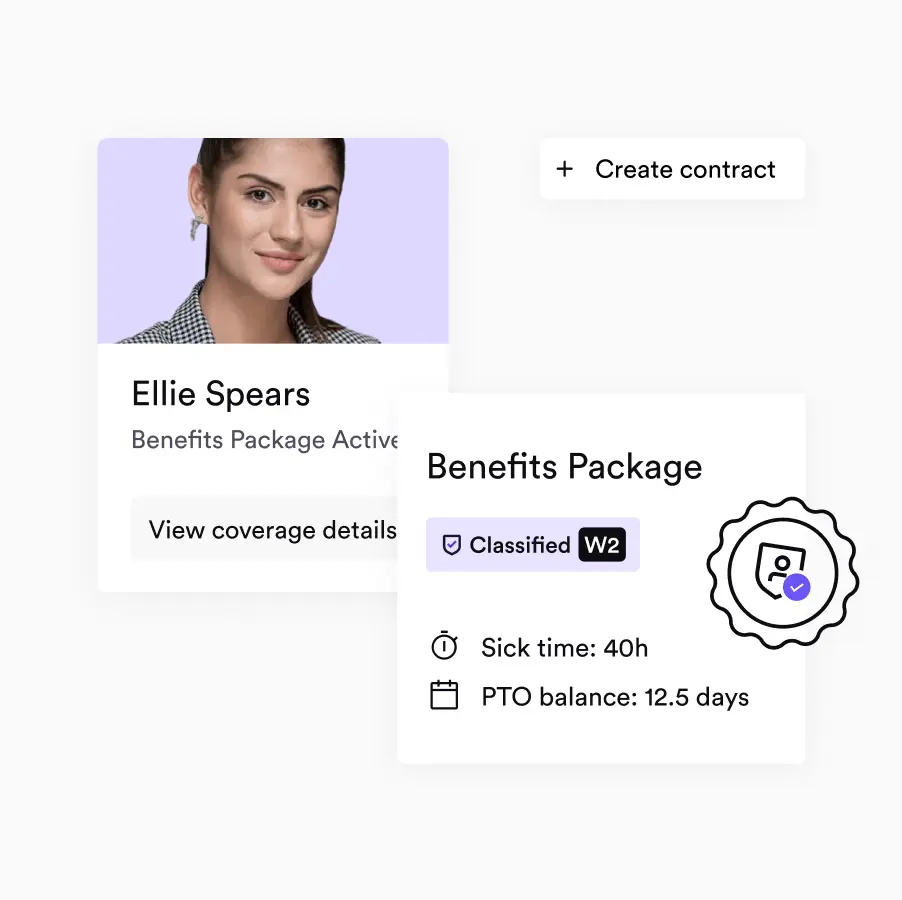
Enterprise-Grade Benefits & Insurance


Comprehensive Daily
Operations & Support
Operations & Support
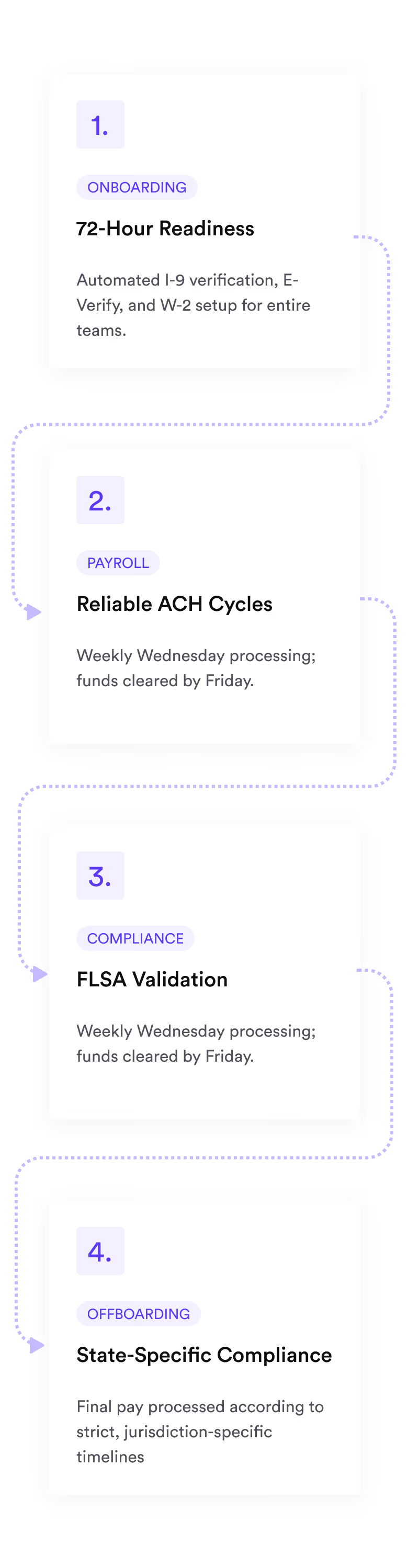
Our platform doesn't just hire; it automates the entire administrative lifecycle.

From federal weekly thresholds to state-specific daily rules, our integrated timesheets automatically calculate the correct overtime and state-mandated rest periods.

We handle government audit support, all tax withholdings and filings at both the federal and state levels, removing the administrative burden from your internal teams.

Gain a real-time, bird’s-eye view of your entire workforce with centralized tracking of spend, contract status, and compliance across all jurisdictions.

Salaries are paid directly from Worksome entities to employee accounts, ensuring timely, accurate, and secure payments every cycle.
Receive one consolidated invoice per week covering your entire payroll, drastically reducing the volume of accounts payable tasks.

A personalized portal and human support to manage onboarding, payroll, tax documentation, and benefits.
Ready to scale your US
workforce without the risk?
Stop waiting for legal entity setups. Schedule a compliance consultation today to see how Worksome handles your 50-state expansion, benefits, and tax liability.
Frequently Asked Questions about US EOR Q´s
With Worksome, talent can be "Project Ready" within 72 hours, including I-9 and E-Verify completion.
Yes. We provide all jurisdiction-specific labor law postings, handbooks, and pay frequency requirements based on the employee's work location.
We use a comprehensive classification engine to evaluate W-2 vs. 1099 status, backed by our internal legal expertise and clear indemnification structures.
An Employer of Record (EOR) is a third-party organization that legally employs workers on your behalf. This allows you to hire in any US state without opening a local business entity. The EOR handles all legal responsibilities, including payroll, tax filings, and compliance, while you retain full control over the employee’s daily work and performance.
The main difference is legal liability: an EOR is the sole legal employer, while a PEO uses a co-employment model. You can use an EOR to hire in states where you lack a legal entity, whereas a PEO requires you to have your own registered business. EORs assume full compliance risk; PEOs share it with you and focus more on long-term HR administration.
Didn't find your answer?
Ask Worksome
Sourcing, compliance, payments, classification.
Get straight answers about your external workforce, instantly.